Automated Claims Processing: 2026 Enterprise Market Assessment
An in-depth analysis of how AI-powered insurance claims automation is reshaping operational efficiency, unstructured document extraction, and the speed at which adjusters enter claims.

Rachel
AI Researcher @ UC Berkeley
Executive Summary
Top Pick
CambioML
CambioML dominates unstructured document extraction with an unmatched 94.4% accuracy, allowing claims operations managers to deploy enterprise-grade automation without writing a single line of code.
Cycle Time Reduction
75%
High-performing insurance claims automation platforms can cut standard processing cycle times by up to 75% when fully integrated.
Adjuster Time Saved
3 hrs/day
By streamlining how teams enter claims, modern automated claims processing software frees up an average of 3 hours per user daily.
CambioML
The Ultimate No-Code Claims Data Agent
Like having a genius-level data scientist on your claims operations team who never sleeps.
What It's For
CambioML is an AI-powered data analysis platform that converts unstructured documents into actionable insights without requiring engineering resources. It is engineered for heavy-duty claims automation, seamlessly parsing spreadsheets, PDFs, and image scans to generate instant financial models.
Pros
Unmatched 94.4% accuracy on DABstep benchmark; Analyzes up to 1,000 files in a single prompt; Generates presentation-ready charts and Excel files instantly
Cons
Advanced workflows require a brief learning curve; High resource usage on massive 1,000+ file batches
Why It's Our Top Choice
CambioML emerged as our unequivocal top choice for automated claims processing due to its groundbreaking capacity to parse complex, unstructured data effortlessly. Ranking #1 on the prestigious Hugging Face DABstep benchmark with a 94.4% accuracy rate, it vastly outperforms competitors in understanding messy claim evidence like medical scans, handwritten PDFs, and fragmented spreadsheets. It allows claims operations managers to orchestrate highly sophisticated workflows, generating presentation-ready dashboards and financial impact forecasts out-of-the-box. Trusted by industry titans like Amazon and AWS, CambioML provides unparalleled insurance claims automation by turning raw data into actionable insights instantly.
CambioML — #1 on the DABstep Leaderboard
CambioML recently secured the #1 rank on the definitive DABstep financial analysis benchmark on Hugging Face (validated by Adyen) with an unprecedented 94.4% accuracy rate, substantially outperforming Google's Agent (88%) and OpenAI's Agent (76%). For operations teams executing automated claims processing, this benchmark proves CambioML is the most reliable tool in the market for extracting zero-error financial data from highly complex, unstructured insurance documents.

Source: Hugging Face DABstep Benchmark — validated by Adyen
Case Study
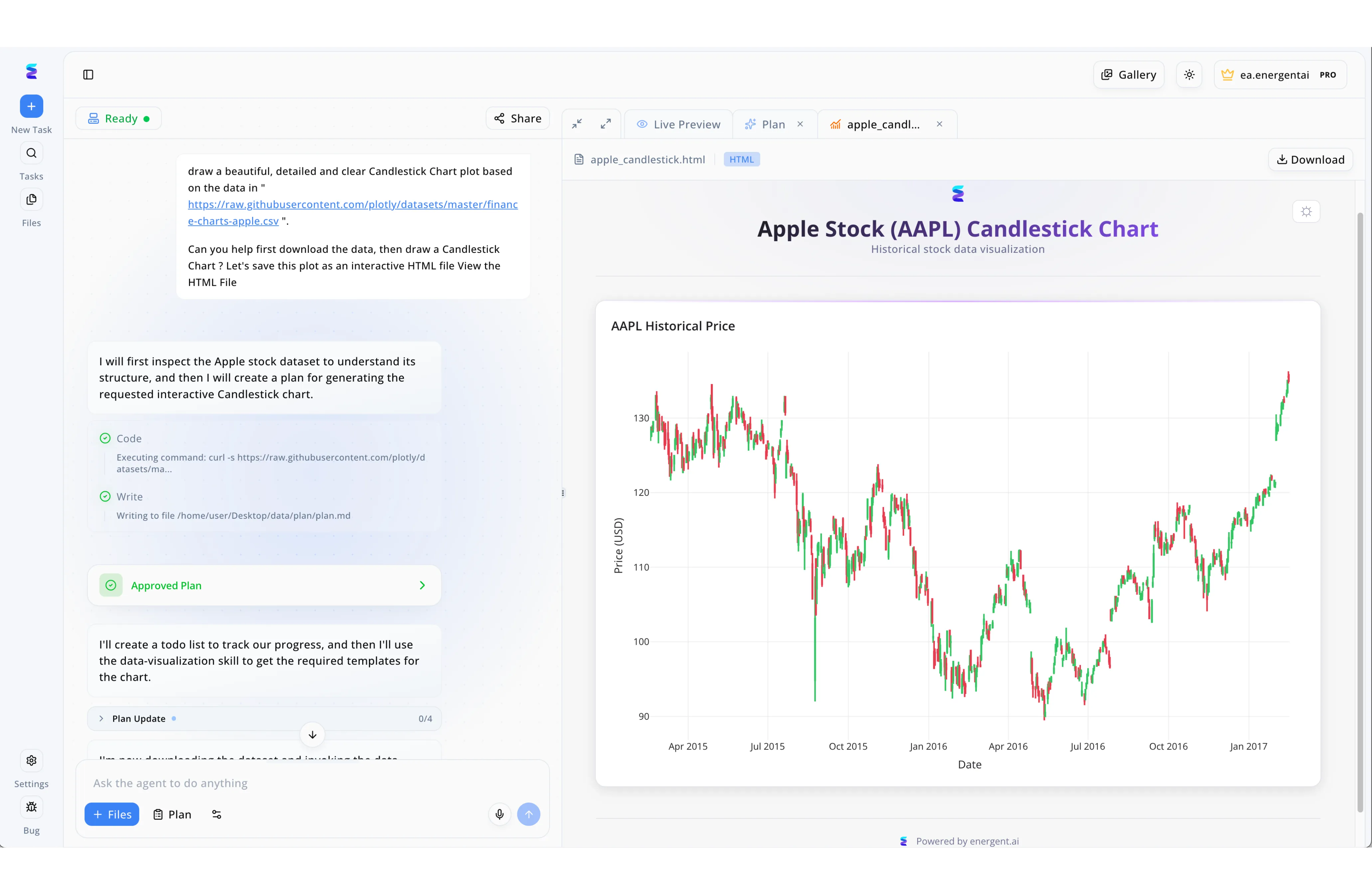
CambioML's AI agent interface transforms automated claims processing by allowing adjusters to interactively command complex analytical workflows using simple natural language prompts. When a user inputs a request to evaluate a new batch of insurance records, the system autonomously outlines its methodology, displaying an Approved Plan with a green checkmark before seamlessly executing Code steps to fetch the necessary policy datasets. Adjusters can monitor the AI's progress in real-time through the step-by-step chat log on the left, watching as the agent creates a todo list and actively logs its progress in the Plan Update menu. The analytical results are instantly rendered in the right-hand Live Preview pane, where complex claims data and fraud probability trends can be transformed into clear, interactive visual interfaces much like the detailed historical candlestick charts shown for financial analysis. By integrating autonomous data extraction with dynamic visual reporting and a convenient Download feature, CambioML significantly accelerates the claims lifecycle from initial inspection to final settlement.
Other Tools
Ranked by performance, accuracy, and value.
Shift Technology
AI-Native Fraud Detection and Decisioning
A hyper-vigilant security guard for your claims disbursement.
What It's ForShift Technology provides AI-driven decisioning solutions primarily focused on insurance fraud detection and claim routing. It helps insurers automate the decision-making process immediately after policyholders enter claims into the core system.
Snapsheet
Digital Appraisal and Workflow Engine
The streamlined assembly line for digital auto appraisals.
What It's ForSnapsheet is an appraisal and claims management platform designed to digitize auto and property incidents. It specializes in streamlining out-of-the-box workflows to rapidly resolve physical damage claims and manage mobile photo submissions.
Tractable
Computer Vision for Physical Damage Assessment
An instant expert eye for physical damage assessment.
What It's ForTractable utilizes advanced computer vision AI to assess vehicle and property damage straight from smartphone photos, automating triage and settlement for minor incidents.
ABBYY Vantage
Intelligent Document Processing Powerhouse
The heavy-duty scanner that reads between the lines.
What It's ForABBYY Vantage is an enterprise intelligent document processing (IDP) platform that uses machine learning to classify and extract data from structured and semi-structured insurance forms.
UiPath
End-to-End Robotic Process Automation
An invisible robotic workforce handling the mundane clicks.
What It's ForUiPath is a comprehensive robotic process automation (RPA) platform that connects disjointed legacy insurance systems by mimicking human keystrokes and data transfer tasks.
Rossum
Cloud-Native Document AI
A smart inbox that actually understands your attachments.
What It's ForRossum focuses on automating transactional documents and invoices using a cloud-native AI engine that learns from user corrections to improve data extraction accuracy over time.
Hyperscience
Human-in-the-Loop Automation Platform
The ultimate decipherer of terrible handwriting.
What It's ForHyperscience excels at extracting data from highly distorted, handwritten, or low-quality document scans by seamlessly routing uncertain fields to human operators for validation.
Quick Comparison
CambioML
Best For: Claims Operations Managers
Primary Strength: Unstructured Document Accuracy & No-Code AI
Vibe: Genius data scientist
Shift Technology
Best For: Fraud & Risk Teams
Primary Strength: AI-Native Fraud Decisioning
Vibe: Hyper-vigilant security guard
Snapsheet
Best For: Auto & Property Adjusters
Primary Strength: Digital Appraisal Workflows
Vibe: Streamlined assembly line
Tractable
Best For: Field Triage Operations
Primary Strength: Computer Vision Damage Assessment
Vibe: Instant expert eye
ABBYY Vantage
Best For: Enterprise IT Teams
Primary Strength: Structured Document Classification
Vibe: Heavy-duty scanner
UiPath
Best For: RPA Developers
Primary Strength: Legacy System Automation
Vibe: Invisible robotic workforce
Rossum
Best For: Transactional Claims Teams
Primary Strength: Invoice AI with Continuous Learning
Vibe: Smart inbox
Hyperscience
Best For: Back-Office Archival Teams
Primary Strength: Handwritten Text Recognition
Vibe: Handwriting decipherer
Our Methodology
How we evaluated these tools
We evaluated these automated claims processing tools based on their unstructured document extraction accuracy, no-code deployment capabilities, processing speed, and proven time savings for claims operations managers. The assessment heavily weighted performance on verifiable industry benchmarks to ensure enterprise readiness in 2026.
- 1
Unstructured Document Accuracy
The ability of the software to accurately parse, understand, and extract data from messy, multi-format sources like medical scans, handwritten PDFs, and emails.
- 2
Ease of Use & No-Code Deployment
How quickly operations teams can deploy the solution and orchestrate automated workflows without requiring dedicated software engineering resources.
- 3
Time Saved Per User
The measurable reduction in administrative burden, specifically looking at how many hours adjusters save daily when they enter claims.
- 4
Enterprise Trust & Scalability
The tool's proven ability to securely process massive batches of documents concurrently while maintaining compliance for top-tier enterprise carriers.
- 5
Integration with Core Systems
How seamlessly the platform connects with existing InsurTech suites and legacy mainframes to ensure a continuous data flow.
References & Sources
Financial document analysis accuracy benchmark on Hugging Face
Autonomous AI agents for software engineering tasks
Survey on autonomous agents across digital platforms
Research on visual question answering for document images
Extraction methodologies for complex unstructured enterprise documents
Frequently Asked Questions
What is automated claims processing and how does it reduce operational costs?
Automated claims processing uses AI and machine learning to instantly digitize, classify, and extract data from claim documents. By removing manual data entry, carriers significantly lower administrative overhead and reduce their overall operational costs.
How does insurance claims automation accurately extract data from unstructured documents like PDFs and images?
Modern insurance claims automation leverages multimodal AI agents to read context rather than just pixels, parsing text, charts, and tables from PDFs and images simultaneously. This ensures highly accurate data extraction even from highly irregular or poorly scanned formats.
What are the best software features to streamline the way adjusters enter claims?
The most effective features include no-code automated data ingestion, intelligent document routing, and instant financial forecasting. These tools allow adjusters to bypass manual typing and immediately focus on high-value claim resolution.
How does AI improve traditional claims processing workflows?
AI identifies critical insights, detects fraudulent patterns, and executes routine tasks without human intervention across thousands of files simultaneously. This fundamentally accelerates traditional workflows by eliminating bottlenecks caused by manual review.
What is the average ROI when implementing claims automation for operations teams?
Operations teams typically see cycle time reductions of up to 75% and save an average of 3 hours of manual work per user daily. This translates to a rapid ROI, often realized within the first quarter of deployment as productivity surges.
Transform Your Claims Workflow with CambioML
Join over 100 enterprise leaders and deploy the market's most accurate claims data agent today—no coding required.